
About the Author
Dale Folland is a qualified nutritionist, a USANA Brand Ambassador of 22 years, and the founder of Freeze Tub, a recovery ice bath company. Having lived in Canada for a decade and now based in New Zealand, Dale has spent over two decades educating people across three countries on the science of supplementation and cellular nutrition. He operates Perfect Health Supplements as an authorised USANA retailer serving customers in New Zealand, Australia, and the USA.
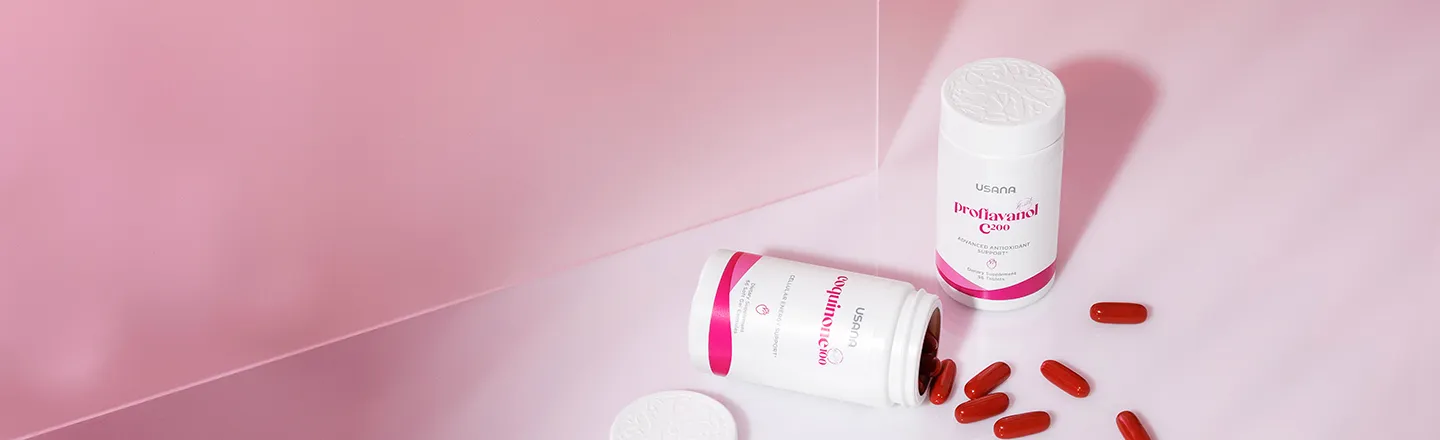
USANA CoQuinone CoQ10 – What It Does, Who Needs It, and Why the Form Matters
CoQ10 is one of the most important nutrients your body produces and one of the first to decline with age and certain medications. A qualified nutritionist and 22-year USANA Brand Ambassador explains the science behind USANA CoQuinone and who genuinely needs it.
CoQ10 sits in an interesting category in the supplement world. It’s not a vitamin you need to consume because your body can’t make it. Your body does make it, but production declines with age, drops sharply in people taking statin medications, and is depleted by chronic stress and intense physical activity. By the time most people reach their mid-40s, their CoQ10 levels are meaningfully lower than they were in their 20s, and the effects show up in energy, cardiovascular function, and cellular resilience.
USANA CoQuinone CoQ10 has been one of my most consistently recommended products throughout my career, particularly for anyone over 40, anyone on statin therapy, and anyone with a family history of cardiovascular disease and generally anybody who is interested in supplementing with the best nutritional products in the world. This chapter explains why.
What CoQ10 Actually Does in Your Body
CoQ10, or coenzyme Q10, is a fat-soluble compound found in virtually every cell in your body. Its primary role is in the mitochondria, the tiny, inner parts of your cells that are responsible for producing energy. The mitochondria generate energy through a process called the electron transport chain, and CoQ10 is an essential component of that chain. Without adequate CoQ10, your cells cannot produce energy efficiently and at times, this has a ripple effect on your energy and potentially, your health.
The organs with the highest energy demands, your heart, liver, kidneys, and brain, have the highest concentrations of CoQ10. This is why CoQ10 deficiency shows up most prominently as fatigue, cardiovascular strain, and cognitive sluggishness rather than more visible symptoms. Most of these symptoms occur very slowly, so slow in fact that the feeling of sluggishness becomes part of your day, and you often put it down to ‘regular aging’.
However, beyond energy production, CoQ10 functions as a powerful antioxidant in its own right. It protects cell membranes and mitochondrial membranes from oxidative damage, works in partnership with vitamin E to regenerate antioxidant capacity, and plays a role in protecting LDL cholesterol from oxidation, which is a key step in the development of arterial plaque.1
Why CoQ10 Levels Decline and Who Is Most at Risk
Your body’s ability to synthesise CoQ10 peaks in your 20s and declines progressively from there. By the time you reach your 60s, CoQ10 levels in heart tissue may be 40 to 50% lower than they were at peak production.2 This decline happens in everyone, but certain factors accelerate it considerably.
The most well-documented cause of CoQ10 depletion outside of ageing is statin medication. Statins work by blocking the HMG-CoA reductase enzyme, which is involved in cholesterol synthesis. The problem is that the same pathway is required for CoQ10 synthesis. Statins reduce CoQ10 production as a direct consequence of how they work, which is why muscle pain and fatigue are among the most common side effects of statin therapy. Research has consistently found that regular CoQ10 supplementation reduces statin-associated muscle symptoms in a meaningful proportion of patients. 3
Beyond statins, intense physical exercise depletes CoQ10 faster than sedentary living. Chronic psychological stress, poor sleep, and high alcohol intake all contribute to faster depletion. Certain other medications, including beta-blockers, antidepressants, and diabetes medications, have also been associated with reduced CoQ10 levels.
Getting adequate CoQ10 from food alone is difficult. The richest dietary sources are organ meats, particularly heart and liver, fatty fish, and beef. A 100g serving of beef heart provides around 11mg of CoQ10 – really, who eats beef heart?.
The doses used in cardiovascular research typically range from 100mg to 300mg per day. You would need to eat an impractical amount of organ meat daily to approach therapeutic doses from food alone.
The Ubiquinone vs Ubiquinol Debate
If you’ve researched CoQ10 at all, you’ve likely encountered the ubiquinone vs. ubiquinol argument. It’s worth addressing directly because it creates a lot of confusion in supplement marketing.
CoQ10 exists in two main forms in the body. Ubiquinone is the oxidised form and the form used in most CoQ10 supplements, including USANA CoQuinone CoQ10. Ubiquinol is the reduced, active form. Marketing for ubiquinol supplements often claims it is superior because it’s the active form and doesn’t require conversion.
The research picture is more nuanced than that. In younger, healthy adults, the body converts ubiquinone to ubiquinol efficiently, and studies comparing the two forms show similar outcomes in this population.4 In older adults and people with compromised conversion capacity, ubiquinol may offer a modest absorption advantage. However, the quality of the delivery system, meaning how the CoQ10 is formulated and encapsulated, often matters more than the form. A high-quality ubiquinone formulation like USANA CoQuinone, which uses an oil-based delivery system designed for fat-soluble nutrient absorption, performs well across the clinical literature.
The bottom line is that both forms can be effective when formulated correctly. The ubiquinol marketing is often more about price justification than clinical necessity, particularly for people under 60.
The Cardiovascular Evidence for CoQ10
The cardiovascular research on USANA Coquinone CoQ10 is some of the most interesting in the supplement space, and it’s been building for decades.
A landmark study published in the Journal of the American College of Cardiology found that CoQ10 supplementation in patients with heart failure reduced major adverse cardiovascular events and improved survival over two years compared to placebo.5 This was a randomized controlled trial, the gold standard of clinical evidence, and the results were sufficiently compelling to attract mainstream cardiology attention.
I hope you’re starting to feel that this is one powerful supplement that needs to be part of your day-to-day
Research has also found that CoQ10 supplementation reduces blood pressure in hypertensive patients, improves endothelial function, reduces oxidative stress markers, and may reduce the progression of arterial stiffness with age.6 These aren’t marginal effects on obscure biomarkers. They’re outcomes that matter clinically.
For someone with a family history of heart disease, anyone on statin therapy, or anyone wanting to support cardiovascular health proactively, the evidence for CoQ10 is as strong as it gets in the supplement world.
USANA CoQuinone 30 vs CoQuinone 100 — Which One Do You Need?
USANA offers two CoQuinone products at different doses, and choosing between them comes down to your individual situation.
CoQuinone 30 provides 30mg of CoQ10 per capsule in an oil-based delivery system alongside alpha lipoic acid, which works synergistically with CoQ10 in mitochondrial energy production and antioxidant function. This is appropriate for general health maintenance, people in their 30s and early 40s using CoQ10 preventively, and people who are already taking the CellSentials and want to add targeted CoQ10 support without a high dose.
CoQuinone 100 provides 100mg of CoQ10 per capsule. This is the dose range most commonly used in cardiovascular research and is appropriate for people over 50, anyone on statin therapy, people with a personal or family history of cardiovascular disease, and anyone with documented fatigue or energy concerns where CoQ10 depletion may be a contributing factor.
If you’re unsure which dose is right for you, speak with your healthcare provider. If you’re on statin medication, that conversation is particularly important because your doctor may want to monitor your response to supplementation.
How to Take USANA CoQuinone
You generally want to take CoQuinone with a meal containing fat. This is because USANA Coquinone CoQ10 is fat-soluble, which means it requires dietary fat for absorption. Taking it with a fat-free meal or on an empty stomach reduces how much your body actually absorbs. The oil-based capsule formulation USANA uses helps with this, but food fat still improves uptake.
For CoQuinone 100, some people split the dose across two meals rather than taking all 100mg at once, as there is a steady amount of the nutrient over the course of a day. There’s some evidence that CoQ10 absorption plateaus at higher single doses, so splitting across two meals may improve total daily uptake, though this matters more at very high doses than at 100mg.
As with all cellular nutrition supplements, consistency over months rather than weeks is where the benefit accumulates. CoQ10 is not a supplement you take for two weeks and evaluate. It works by gradually restoring cellular CoQ10 levels, which takes time.
Shop USANA CoQuinone
Available in CoQuinone 30 and CoQuinone 100 for delivery to New Zealand, Australia, and the USA. Sign up as a Preferred Customer at checkout and save up to 20% off retail pricing.
References
- Littarru GP, Tiano L. Bioenergetic and antioxidant properties of coenzyme Q10: recent developments. Mol Biotechnol. 2007;37(1):31-37. PubMed
- Kalen A, et al. Age-related changes in the lipid compositions of rat and human tissues. Lipids. 1989;24(7):579-584. PubMed
- Banach M, et al. The effects of coenzyme Q10 on statin-induced myopathy: a systematic review and meta-analysis. Mayo Clin Proc. 2015;90(1):24-34. PubMed
- Bhagavan HN, Chopra RK. Coenzyme Q10: absorption, tissue uptake, metabolism and pharmacokinetics. Free Radic Res. 2006;40(5):445-453. PubMed
- Mortensen SA, et al. The effect of coenzyme Q10 on morbidity and mortality in chronic heart failure. JACC Heart Fail. 2014;2(6):641-649. PubMed
- Rosenfeldt FL, et al. Coenzyme Q10 in the treatment of hypertension: a meta-analysis of the clinical trials. J Hum Hypertens. 2007;21(4):297-306. PubMed
Continue Reading
Chapter 6: Bones, Joints and Magnesium — USANA Procosa & MagneCal D